Gloster, the teak house that Bristol launched and Java built
Founded in 1960 and registered as a teak specialist in Bristol in 1981, Gloster now runs one of the most focused teak operations in outdoor furniture from its own factory on Java, Indonesia.
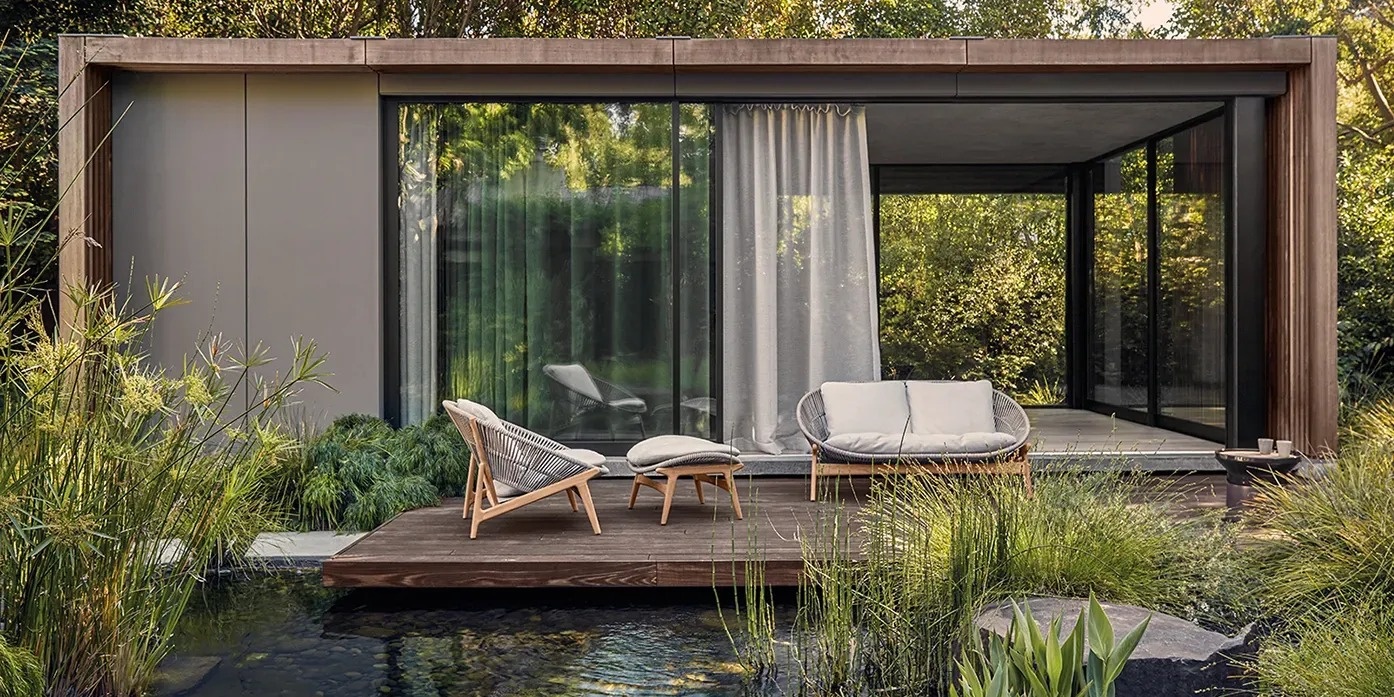
Gloster began in West Africa in 1960, where a group of furniture makers set up production and developed craft expertise. The defining move came later, when operations relocated to Indonesia — the region where plantation-grown teak had been cultivated at scale for generations, and where Gloster could bring its wood supply under direct control from plantation to workshop. The Gloster brand itself was registered in Bristol, United Kingdom, in 1981, as a specialist maker of teak garden furniture — the origin of what the company describes as its British teak tradition. The legal entity is now Gloster Furniture GmbH, headquartered in Lüneburg, Germany, but the founding identity as a Bristol-registered teak house is built into the brand's own account of its history.
Teak is a considered bet. Gloster's own account of the material calls it "the benchmark hardwood for fine outdoor furniture for more than 700 years" — a claim with demonstrable support in the timber's properties. It is a dense, closegrained hardwood with a high natural oil content that resists moisture, rot and the ultraviolet damage that degrades most outdoor materials within a few seasons. The case for teak as the material of outdoor furniture is not primarily decorative — though the warm honey of fresh-cut boards and the silver-grey that comes with weathering are both considered outcomes — but functional. A properly made teak piece requires very little maintenance to last for decades.
A Gloster teak tree has a lifecycle of at least fifty years before harvest. The timeline is the quality control.
The plantation at the centre
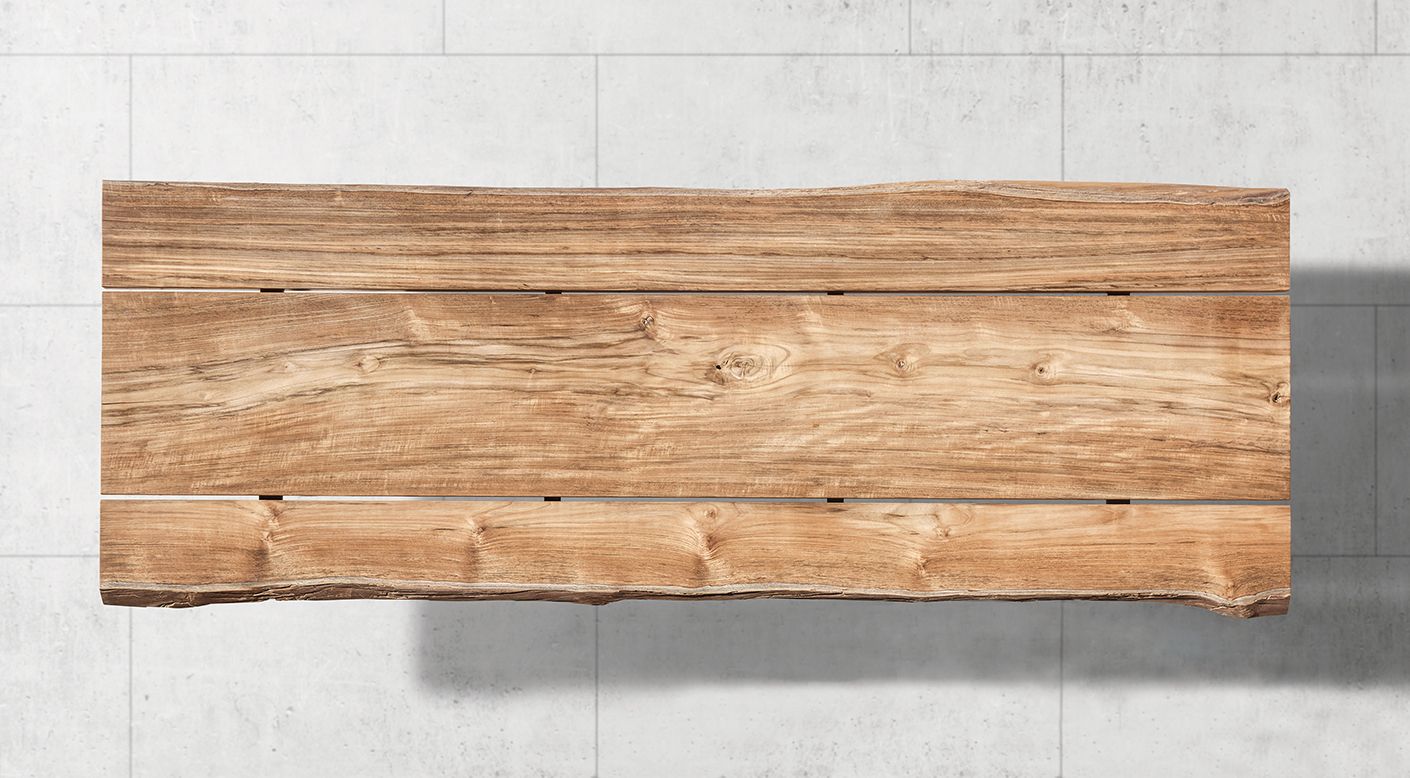
Gloster's factory on Java, Indonesia, sits close to teak plantations where cultivation has been carried on since the nineteenth century. Java's long tradition of managed teak forests is part of the reason the island was chosen: the plantation culture, and the craftsmen skilled in working the material, were already established there. Gloster's own trees are harvested only after a minimum of fifty years of growth. Once cut, the wood is dried, sorted and inspected before it enters the workshop, where more than a thousand craftsmen shape joints, round corners and assemble pieces by hand — processes that machinery cannot fully replicate in a material as variable as grown timber.
Left untreated, Gloster teak will silver gradually over the first season or two on a US terrace: the natural oil content slows weathering but does not prevent it. Oiled periodically, the wood holds its warm colour. Both outcomes are normal behaviour for a material performing as it should outdoors. The house publishes care guidance by collection; the aluminium and rope collections in the range have separate requirements.
The design direction
The current shape of the Gloster catalogue was drawn substantially under the artistic direction of Henrik Pedersen of the Danish studio 365°. His brief was to align Scandinavian formal precision with Gloster's material craft in teak and woven fibre. That alignment is visible across the core collections: Bora pairs a teak structural frame with a circular hand-woven back; Raw presents plantation teak as the designed surface, with grain, knots and growth rings left legible; Fern by Sebastian Herkner combines a teak frame with a woven outdoor-rope backrest; Saranac by Mark Gabbertas takes a clean architectural line with teak and braided rope. The teak discipline — plantation grown, aged for decades, hand-crafted on Java — holds across every teak piece in the range, whatever the design name applied.