European journal about premium furnitureItaly / Germany / Spain / Denmark / Belgium
Brand story

Unopiù, the Italian house that invented dedicated outdoor design

Before 1978, outdoor furniture in Italy was mostly anonymous catalogue goods. Unopiù set out to give exterior spaces the same considered design that interiors already received, and built the first Italian house dedicated entirely to it.
By the deskSoriano nel Cimino, Lazio19 October 20265 min read

Unopiù was founded in 1978 in Soriano nel Cimino, a hill town in the Tuscia area of Lazio roughly fifteen kilometers from Viterbo. At the time, outdoor furniture in Italy was largely treated as an afterthought — anonymous catalogue goods rather than designed objects. Unopiù set out to change that, giving exterior spaces the same design attention interiors already received, and in doing so became Italy's first house built entirely around outdoor furniture rather than adding an outdoor line to an indoor catalogue.

The first Unopiù catalogue appeared in 1982 and centered on teak and timber pieces that stayed in the range for decades. The Amanda hammock, introduced in 1988, became an early symbol of the more relaxed, considered approach to outdoor living the company was pursuing — a piece built for lounging rather than dining or entertaining. That founding instinct, furniture built specifically for time spent outside rather than adapted from indoor design, still organizes how the current catalogue is built.

Before Unopiù, outdoor furniture in Italy was largely anonymous catalogue goods. The company set out to give exterior spaces the same design attention interiors already received.
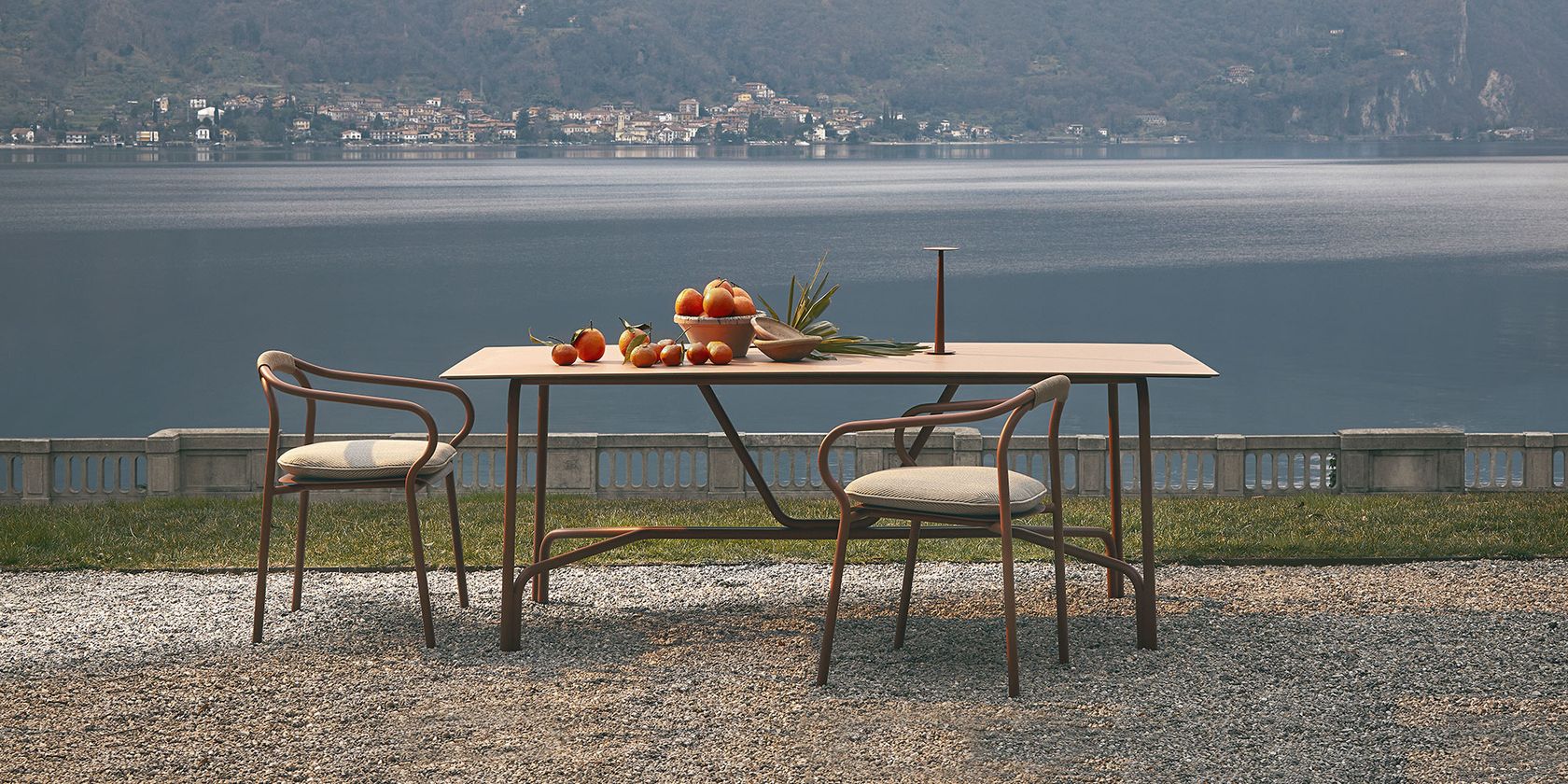
Unopiù Salò outdoor lounge collection
Salò, an artisan Italian outdoor collection of garden sofas, chairs, tables and sun loungers.
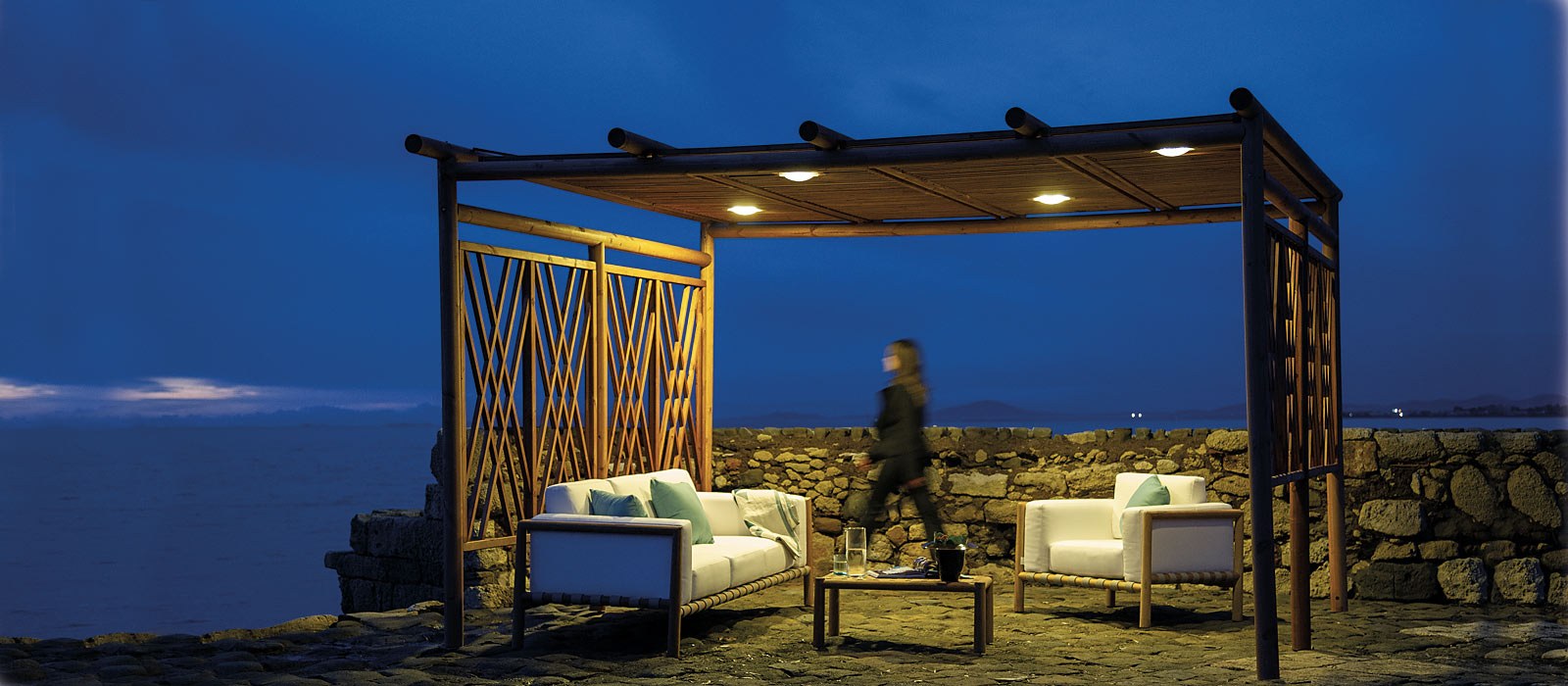
Unopiù Nagi pergola in Nordic pine and teak wood
Nagi, a handcrafted pergola in Nordic pine and teak, extends the catalogue from furniture into shading structures.

A catalogue that grew past seating

Several current lines run on WaProLace, a woven synthetic fiber used across Agòrà, Capri, Experience and Olimpia — modular sofas, dining chairs and lounge sets built on lightweight aluminum frames. Unopiù also builds structures beyond furniture: Meridienne and Solaire are modular aluminum and iron pergolas, Shibuya is a mobile pergola line, Tibisco is a gazebo range in galvanized iron, and Orangerie extends into garden greenhouses — an unusually wide scope for a house that started with a single teak and timber catalogue.

Where the design comes from

Today the house works with internationally recognized designers to shape lounge, dining, shade and structural pieces across the range. Cora and Pevero keep the teak-and-rope instinct closest to the brand's original catalogue, while lines such as Davos, whose aluminum joints draw on Walser craftsmanship, and Tline, in mud or dove-gray aluminum, extend the range into more contemporary territory suited to both residential and public spaces.

For US buyers, Unopiù collections reach the market through authorized dealers and contract channels, with lead times that vary by line and finish. The full catalogue is in our Unopiù profile.

Frequently asked

Answered.

What is Unopiù?

Unopiù is an Italian outdoor furniture house founded in 1978 in Soriano nel Cimino, Lazio, generally credited as Italy's first house built entirely around outdoor furniture.

Who founded Unopiù, and when?

Unopiù was founded in 1978 in Soriano nel Cimino, a hill town in the Tuscia area of Lazio near Viterbo.

Where is Unopiù based?

Unopiù is headquartered in Soriano nel Cimino, roughly fifteen kilometers from Viterbo, Lazio, Italy.

Why is Unopiù called Italy's first outdoor-only house?

At the time of its founding, outdoor furniture in Italy was largely anonymous catalogue goods. Unopiù set out to give exterior spaces the same design attention interiors already received, building a catalogue focused entirely on outdoor furniture rather than adding one to an indoor range.

What was in Unopiù's first catalogue?

Unopiù's first catalogue appeared in 1982 and centered on teak and timber pieces that remained signatures of the brand for decades.

What is the Amanda hammock?

The Amanda hammock, introduced in 1988, was an early emblem of Unopiù's relaxed, considered approach to outdoor living — a piece built specifically for lounging.

What is WaProLace?

WaProLace is a woven synthetic fiber Unopiù uses across several current collections, including Agòrà, Capri, Experience and Olimpia, typically over lightweight aluminum frames.

Does Unopiù make anything besides furniture?

Yes. The catalogue includes pergolas (Meridienne, Solaire, Shibuya), a gazebo range (Tibisco) and garden greenhouses (Orangerie), alongside its seating, dining and lounge lines.

What is the Nagi pergola?

Nagi is a handcrafted pergola in Nordic pine and teak wood, built as a modular structure for shaded outdoor spaces.

What is the Davos collection?

Davos is a modular collection of outdoor sofas, armchairs and chairs, with aluminum joints inspired by Walser craftsmanship that allow full customization.

Does Unopiù still make teak furniture?

Yes. Cora, Pevero and Chelsea are among the current lines that keep Unopiù's original teak-focused catalogue closest to its 1978 founding identity.

Is Unopiù available in the US?

Yes. Unopiù collections reach the US market through authorized dealers and contract channels, with lead times that vary by line and finish.

Does Premium Furniture sell furniture?

No. We are an editorial directory and journal. We map the houses and point you to the maker. We do not sell or publish prices.

Which market do you cover?

The United States. Availability and lead times are framed for US buyers, while the houses themselves are European.

Let's talk

Request a quote or partnership

Write to desk@patio-furniture-sets.com and the desk will reply within one business day.

By submitting, you consent to be contacted about your enquiry.