Bitta and Maia: Kettal’s two flagship outdoor collections compared
Rodolfo Dordoni’s rope-and-aluminium Bitta and Patricia Urquiola’s braided Maia — two distinct outdoor design statements from the Spanish house, placed side by side.
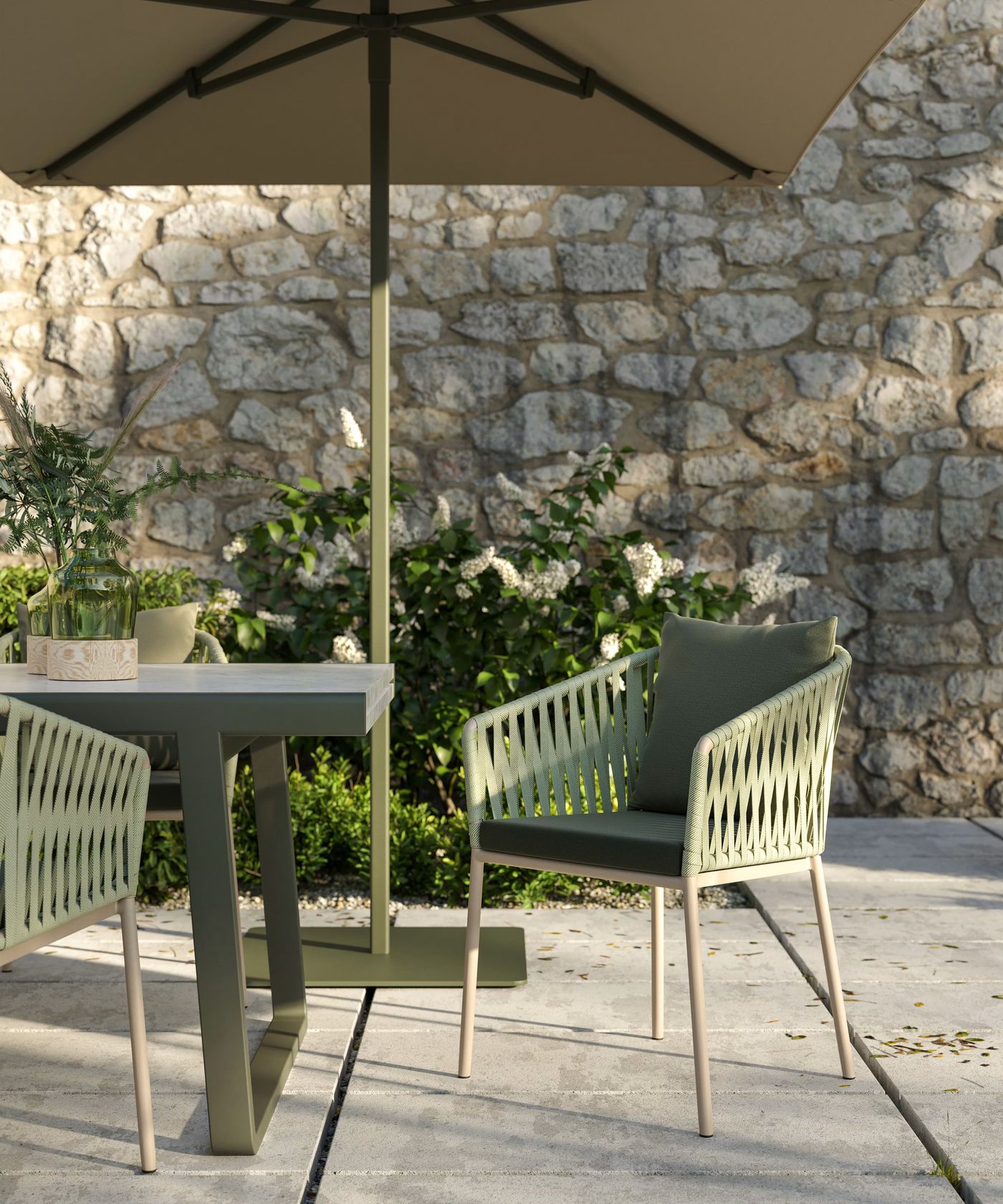
Among the Spanish house Kettal’s outdoor collections, two names appear most often alongside the brand: Bitta and Maia. Both are flagship lines. Both are built on aluminium and woven materials. But they come from different hands — Rodolfo Dordoni and Patricia Urquiola respectively — and they arrive at the outdoor room by distinctly different routes.
Bitta is Rodolfo Dordoni’s contribution. The name means “mooring” in Italian — a bollard on a dock, the thing a rope is wound around to secure a boat. Dordoni described his aim as creating a dense braiding that would still let air through, reminiscent of the ropes used to moor boats: pieces that look lightweight but also settle into cosy, nest-like forms in natural colours. The structure is aluminium; the seating surface is braided polyester cord whose density and texture carry the nautical reference without literally repeating it. The palette follows the idea — close to the tone of weathered rope and salt-bleached wood.
Dordoni’s brief was a dense braiding that still lets air through — cosy nests in natural colours, with the weight of rope and the lightness of air.
Patricia Urquiola’s Maia: craft as structure
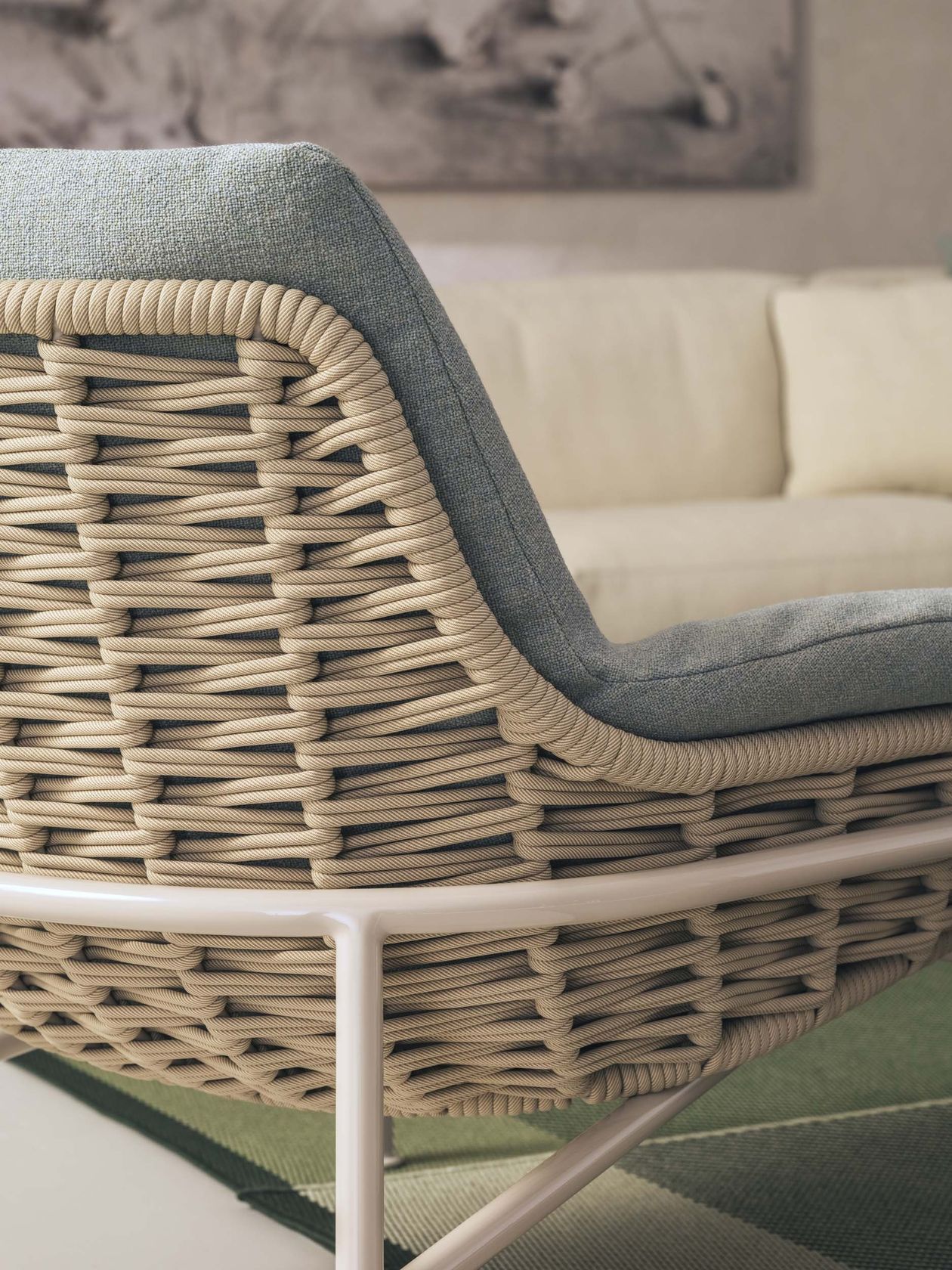
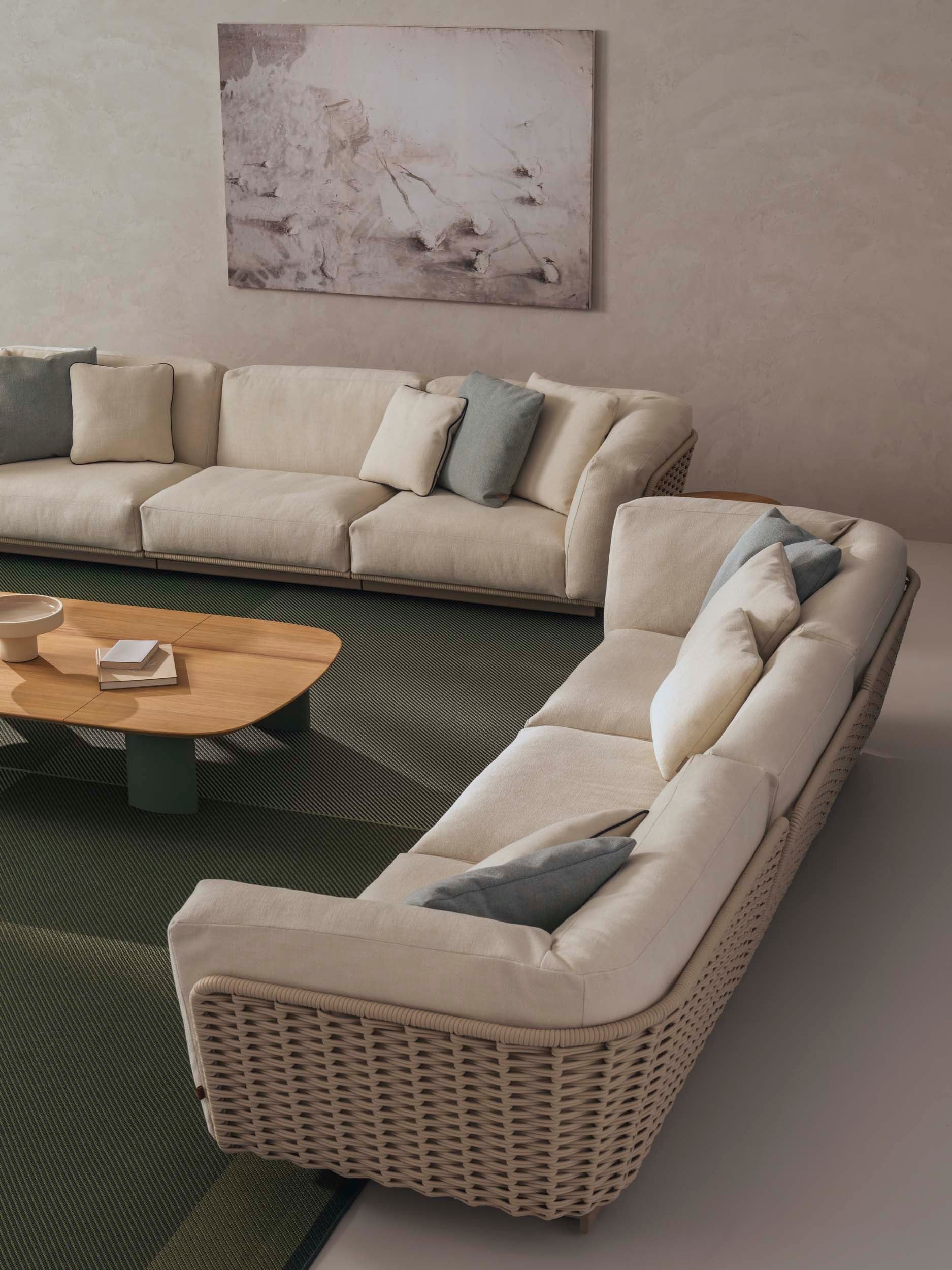
Maia arrives from a different place. Patricia Urquiola designed it as a collection in which the artisanal braiding is not simply a texture applied to a frame but the fundamental visual logic of the piece. The aluminium structure is present, but the weave is what you see: hand-braided work in synthetic fibre and rope that gives the seating a density and presence rarely found in outdoor furniture. The line runs across a wide family — sofas, deck chairs, daybeds, footrests, dining armchairs, bar stools and tables — and Urquiola has returned to the collection over time, extending and updating it, with teak legs and nautical rope appearing in later versions.
Two registers, one house
Set beside each other the contrast is useful. Bitta’s braiding reads as linear — tight cords running in parallel, the rhythm of a mooring rope. Maia’s weave reads as more textile-like, an interlacing that catches light differently and surrounds cushions in a more enclosed, upholstered way. Bitta’s family spans dining and lounge; related lines — Bitta Lounge and Grand Bitta, both also by Dordoni — extend the idea into softer and larger-scale formats. Maia’s family has grown into a broader system with more piece types.
For a US terrace, the practical choice between them comes down to register and scale. Bitta is precise and nautically referential; Maia is craft-forward and textile-like. Both are weatherproof outdoor collections from the same Barcelona house, both built on an aluminium foundation, and both reach the American market through Kettal’s authorised US dealer network. The full overview of the house — all designers, materials and collections — is in the Kettal profile.
Bitta vs. Maia, at a glance
| Criterion | Bitta | Maia |
|---|---|---|
| Designer | Rodolfo Dordoni | Patricia Urquiola |
| Construction | Aluminium frame, braided polyester cord | Aluminium frame, hand-braided synthetic fibre and rope; later versions add teak legs |
| Visual register | Linear, tight cords; a nautical mooring-rope reference | Textile-like weave; a more enclosed, upholstered read |
| Range | Dining and lounge, plus Bitta Lounge and Grand Bitta variants | A broader system: sofas, deck chairs, daybeds, footrests, dining armchairs, bar stools, tables |