Patricia Urquiola's outdoor body of work at Kettal
From Maia's hand-braided rope to Vimini's wicker reinterpretation — a portrait of the Spanish-Italian designer through the collections she has drawn for the Barcelona house.
Patricia Urquiola was born in Oviedo, Spain, in 1961. She studied architecture at the Universidad Politécnica de Madrid and completed her degree at the Politecnico di Milano, where she worked under the mentorship of Achille Castiglioni. Studio Urquiola, which she co-founded in 2001, is based in Milan and operates across industrial product design, architecture and art direction. Her collaboration with Kettal has produced one of the most varied outdoor bodies of work tied to a single house in contemporary European design.
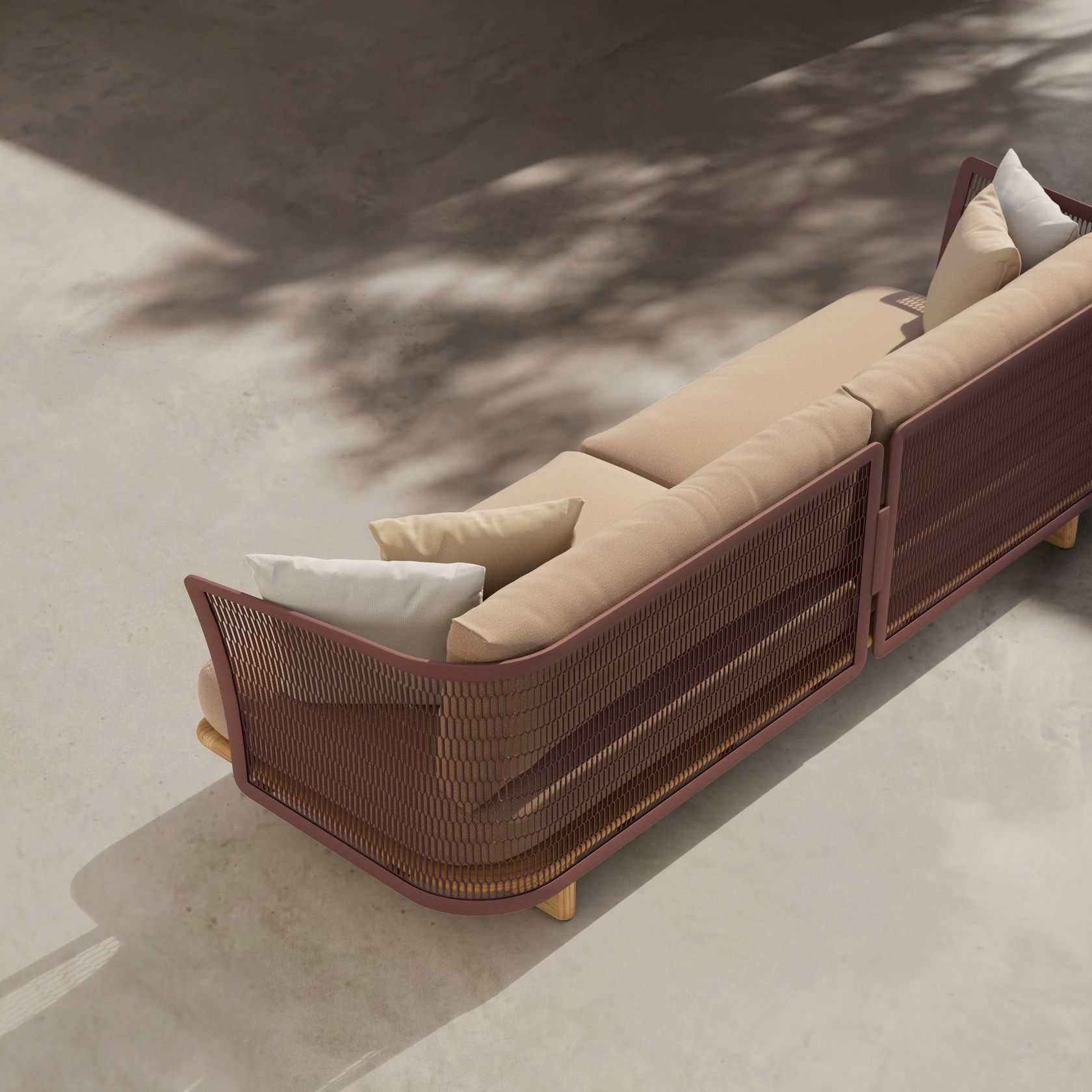
Maia is the collection that established the terms of that collaboration. Each piece pairs an angular aluminium frame with hand-braided rope and teak legs — a combination Urquiola has described as an industrial reinterpretation of handcrafted plaiting. The tension between the precision of the aluminium structure and the warmth of the woven material is the design's governing logic. The line extends across sofas, armchairs, footstools, a bar stool and an egg-shaped hanging swing chair, giving it an unusually wide reach from dining to deep lounge.
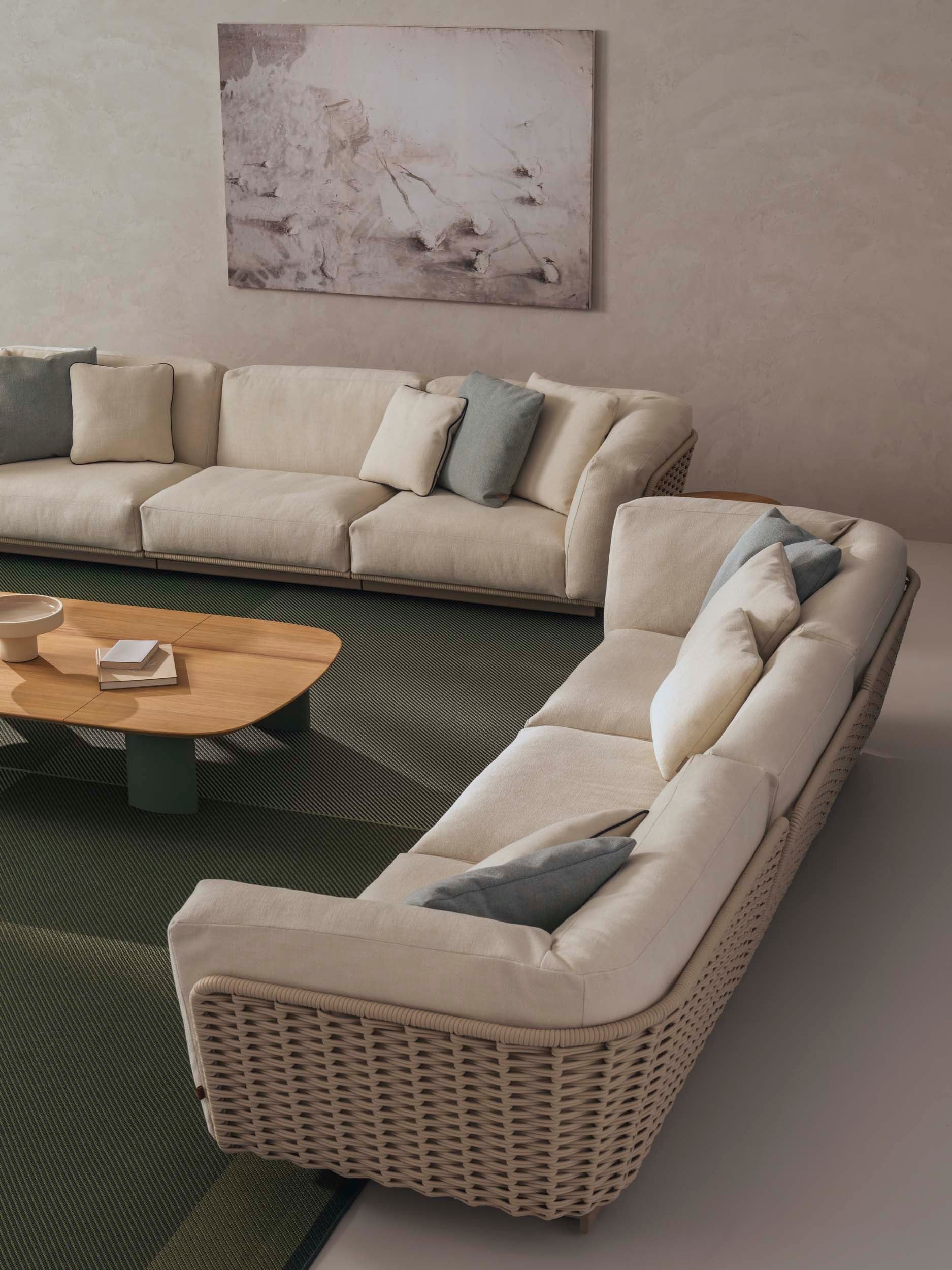
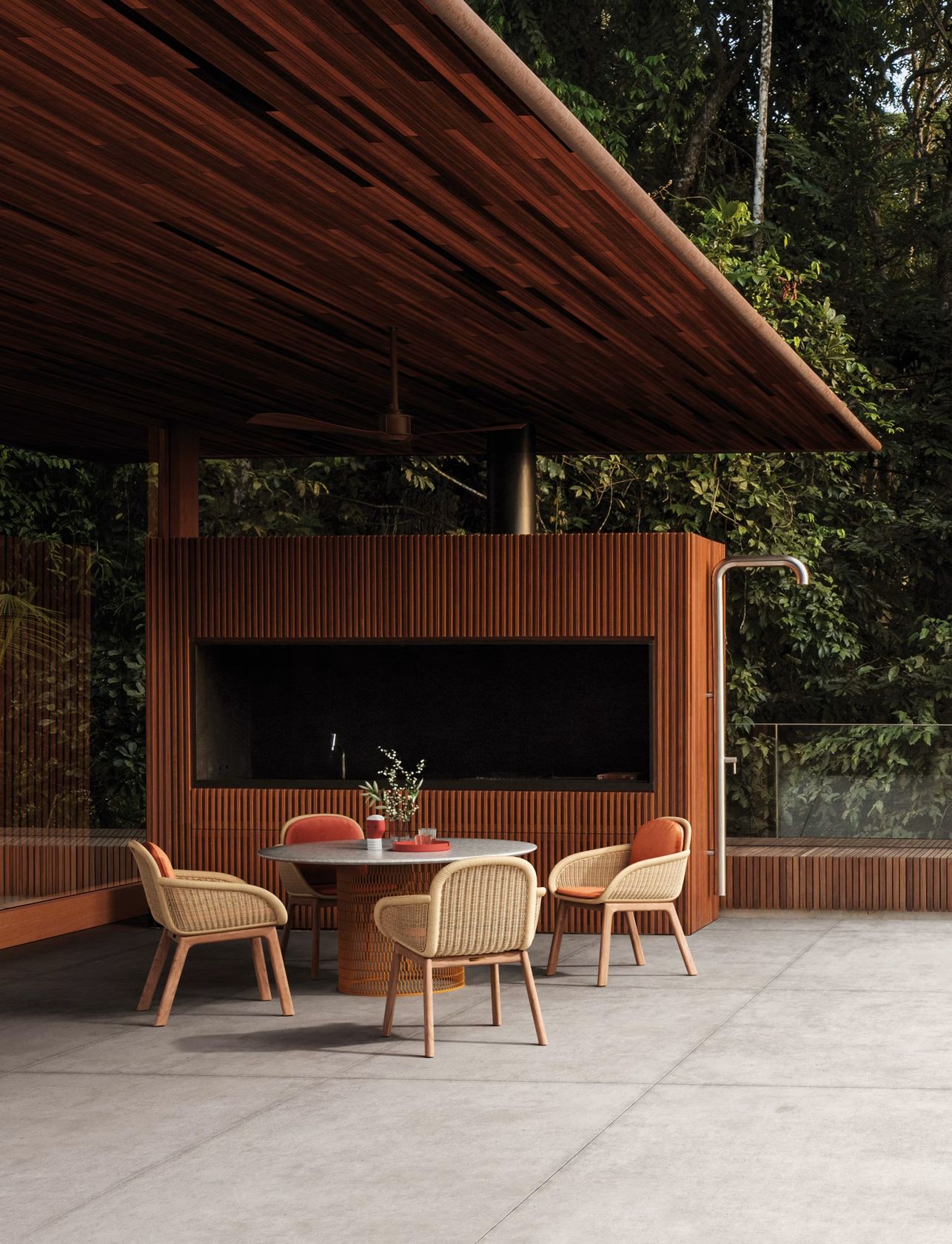
Vimini takes a different approach. The name means wicker in Italian, and the collection draws directly on the tradition of basketwork seating — a reference Urquiola built into both the material and the generous, enveloping proportions of each piece. Where Maia is taut and angular, Vimini is rounded and soft, with large backrest cushions nested inside a woven frame. The collection includes dining armchairs and sofas, and sits closer to a craft reference than anything else in the Kettal catalogue.
Each collection opens a different entry point into the same territory: the terrace, the poolside, the threshold between architecture and the open air.
Architecture as a design source
Mesh shifts the reference entirely. The collection takes its cue not from craft but from construction — specifically the perforated and expanded metal used in architectural facades to filter light and air without stopping them. The backrests and table surfaces use this material directly, creating a contrast between hard industrial structure and soft upholstered cushions. Where Maia and Vimini read warm and woven, Mesh reads precise and considered.
A catalogue built across registers
The later collections extend the range further. Band explores structure through repetition and modular assembly, running across dining chairs and club armchairs. Insula, a modular lounge system, develops a different formal idea: each configuration assembles as a soft archipelago of upholstered platforms on aluminium bases, its name a direct reference to islands floating on a surface. Plumon is built around the logic of tailoring — removable ribbed cushions that dress a teak structure, conceived as a way to adjust the character of a piece with a simple gesture. Roll develops cylindrical volumes across armchairs, stools and tables. Cottage is a small outdoor shelter designed for rest.
Taken across its full span, the Urquiola work at Kettal covers nearly every category in the outdoor catalogue — single dining chair, lounge system, modular sofa, shelter — and draws from a wider set of references than most outdoor bodies of work: basketwork, architectural structure, tailoring, geometry, an island's topography. The full range of collections is documented in the Kettal profile.