Teak or aluminum for the terrace? A material guide for US buyers
Two materials dominate the outdoor furniture houses we cover. Here is what each does well, what it asks of you in upkeep, and where the difference shows on a real terrace.
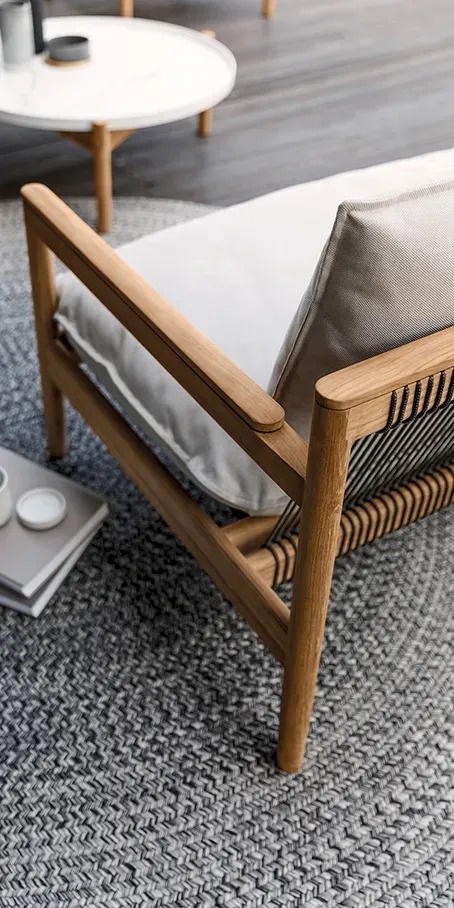
Walk the floor of any premium outdoor house and you will see two material families doing most of the work: teak and powder-coated aluminum. They answer different questions, ask different things of their owners, and look nothing alike on a terrace. This guide sets them against each other using what the houses we cover actually build with.
What makes teak suited to outdoor use
Teak contains a combination of natural oils and silica — mineral deposits in the wood cells — that make it resistant to moisture, rot and insects without any additional treatment. The oils act as built-in water repellents; the dense, interlocked grain limits water penetration at the cellular level. It is one of the few timbers used structurally in marine decks and boat construction for exactly this reason.
Gloster, registered in Lüneburg, Germany, with its main factory on Java, Indonesia, sources FSC-certified plantation teak and works it into much of its outdoor catalogue — Bora, Lima, Saranac and Fern among others. It also builds aluminum-framed collections including Grid, Maya and 180, which makes Gloster a useful single house through which to compare both materials at the same quality level.
Barlow Tyrie, the oldest British outdoor furniture maker, founded in 1920 in Braintree, Essex, built its catalogue on teak from government-certified Indonesian plantations and remains the most teak-identified house in our directory. It also makes pieces in stainless steel and powder-coated aluminum, but teak remains the signature material.
How teak ages
Untreated teak develops a silver-gray patina as its surface oils oxidise under UV light, a process that typically takes five to twelve months depending on sun exposure and climate. The transformation is not deterioration — the wood remains fully weatherproof and structurally sound once gray. Fine surface cracks called checking may also appear; these are cosmetic and do not affect the structural integrity of the piece.
Owners who prefer the original honey-brown colour can maintain it with a seasonal clean using a soft-bristle brush and mild soapy water, followed by a purpose-made teak sealer applied once or twice a year. What to avoid is generic teak oil — most such products are linseed-based and can encourage mildew rather than prevent it. Specific guidance from the maker is the right reference for any collection.
Teak asks very little of its owner. The question is whether you want the silver or the honey — both are maintenance states, not decay states.
The aluminum case
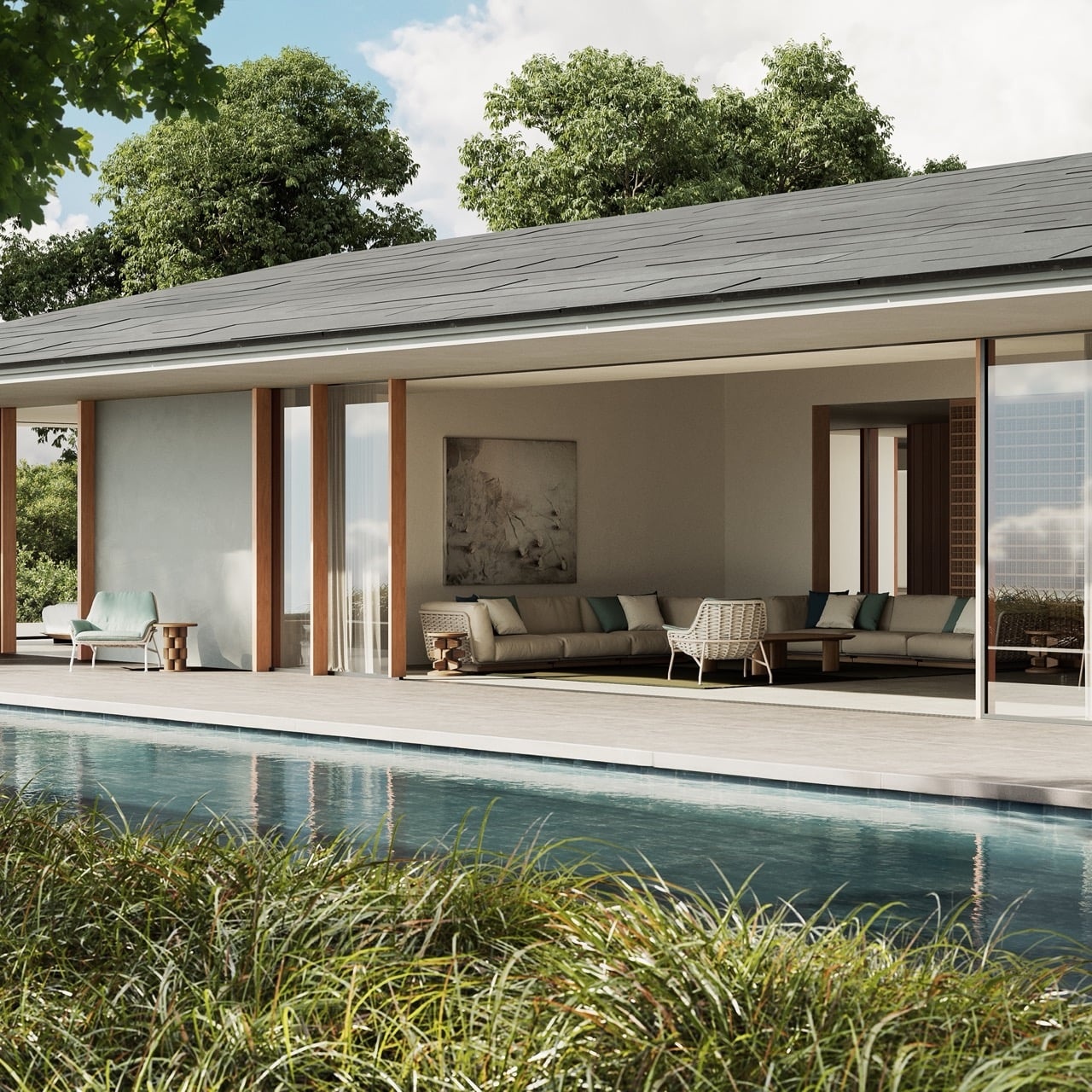
Powder-coated aluminum dominates a large part of the contemporary outdoor catalogue. The material does not rust, resists corrosion in coastal and humid conditions, and is substantially lighter than solid hardwood — a practical advantage on upper-floor terraces and for seasonal storage. Powder coating is applied electrostatically and then oven-cured, bonding it to the aluminum surface in a way ordinary paint cannot match; it does not peel or flake under normal outdoor exposure. The process also opens a wide palette of colours and textures — matte, hammered, high-gloss — giving designers more visual freedom than raw teak allows.
Maintenance compared
Teak benefits from a seasonal wash and, if the owner wants to preserve the original colour, an annual application of a proper teak sealer. Aluminum outdoor furniture needs only periodic washing with mild soap and water; no oils, sealers or specialist products are required. Neither material demands the seasonal stripping and resealing that softwoods or painted steel can require. Both live outdoors year-round in most US climates without structural risk.
Weight and handling
Solid teak is dense and heavy. A large teak dining table is not something most people move alone. That weight can be useful — it holds position in wind — but it is a real consideration on upper-floor terraces or in households that store furniture each winter. Aluminum collections, including stacking designs like Gloster's 180 by Henrik Pedersen, are built with easy seasonal handling in mind.
Choosing
For a buyer drawn to warm natural material and comfortable with periodic sealing, teak is the conventional long-term choice. For a buyer who wants a wide colour palette, lighter handling and truly minimal upkeep, powder-coated aluminum suits better. The houses in our directory span both — Gloster and Barlow Tyrie work in each — and the decision often comes down to the specific collection rather than the house. The profiles in our directory note each collection's material, which is the clearest guide to what you are actually choosing.
Teak vs. aluminum, at a glance
| Criterion | Teak | Powder-coated aluminum |
|---|---|---|
| Weight | Dense and heavy; holds position in wind, harder to move alone | Substantially lighter; easier seasonal handling and stacking |
| Weathering | Develops a silver-gray patina over 5-12 months; cosmetic, not structural | Resists corrosion; the powder coat does not peel or flake under normal use |
| Maintenance | Seasonal wash; annual teak sealer if you want to keep the honey-brown color | Periodic wash with mild soap and water; no oils or sealers |
| Color range | Honey-brown (sealed) or silver-gray (natural) only | Wide palette: matte, hammered, high-gloss finishes |
| Climate suitability | Outdoors year-round in most US climates | Outdoors year-round in most US climates |