European journal about premium furnitureItaly / Germany / Spain / Denmark / Belgium
Guides

When to bring outdoor furniture indoors for winter, material by material

Teak and powder-coated aluminum can stay outside year-round in most US climates. Cushions, fabric and woven pieces are the ones that actually need a season indoors — here is why the difference matters.
By the deskAalborg, North Jutland28 September 20265 min read

Most premium outdoor furniture is built to live outside year-round, and moving it indoors every winter is not required — for teak and powder-coated aluminum in particular, the frames are engineered for exactly that. What actually needs a season indoors is anything with a fabric or paper element: cushions, umbrella canopies, and any woven piece built from natural rattan or a paper-based weave. The material, not the season on its own, decides what comes in.

Teak develops a silver-gray patina as its surface oils oxidize under UV light, a process that runs over roughly five to twelve months and does not affect the wood's structural integrity — this holds through winter exposure as much as summer sun, and our material guide to teak and aluminum covers the mechanics in full. Left outside through a cold season, teak needs nothing beyond its normal seasonal wash; owners who maintain the honey-brown color with a sealer typically reapply it once in spring rather than before winter.

Powder-coated aluminum resists corrosion and does not rust, and the coating itself is not damaged by cold. The one part worth watching is moving hardware — recline mechanisms, folding joints and wheels on loungers — which can stiffen if left exposed through repeated freeze-thaw cycles in colder climates. A light wipe of a silicone-based lubricant on hinges before winter, and keeping the piece dry, addresses most of that risk without moving the furniture at all.

The material, not the season on its own, decides what actually needs to come inside.
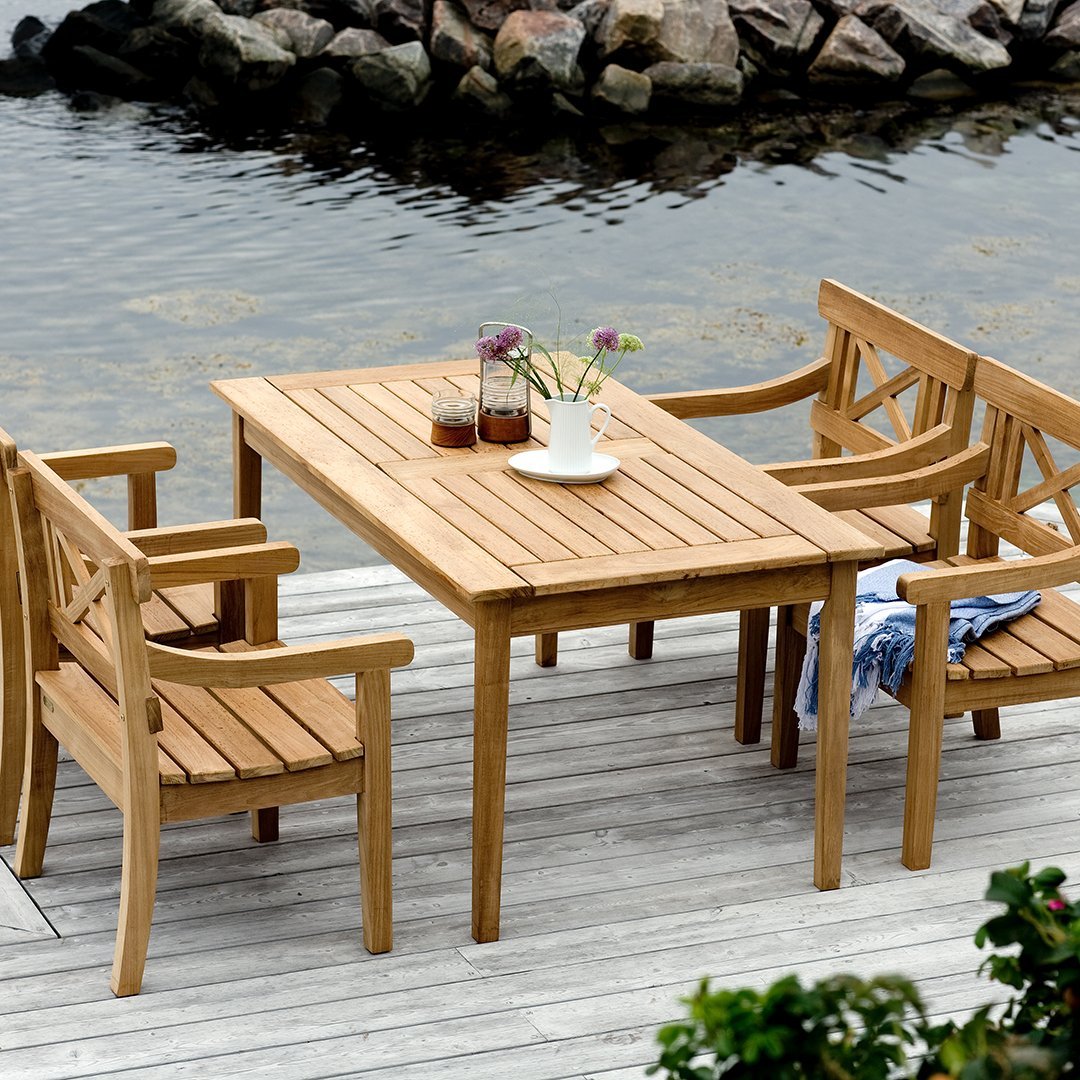
Skagerak Drachmann teak outdoor dining collection
Skagerak's Drachmann line, in FSC-certified teak, is built to stay outside through a Danish winter without cover.
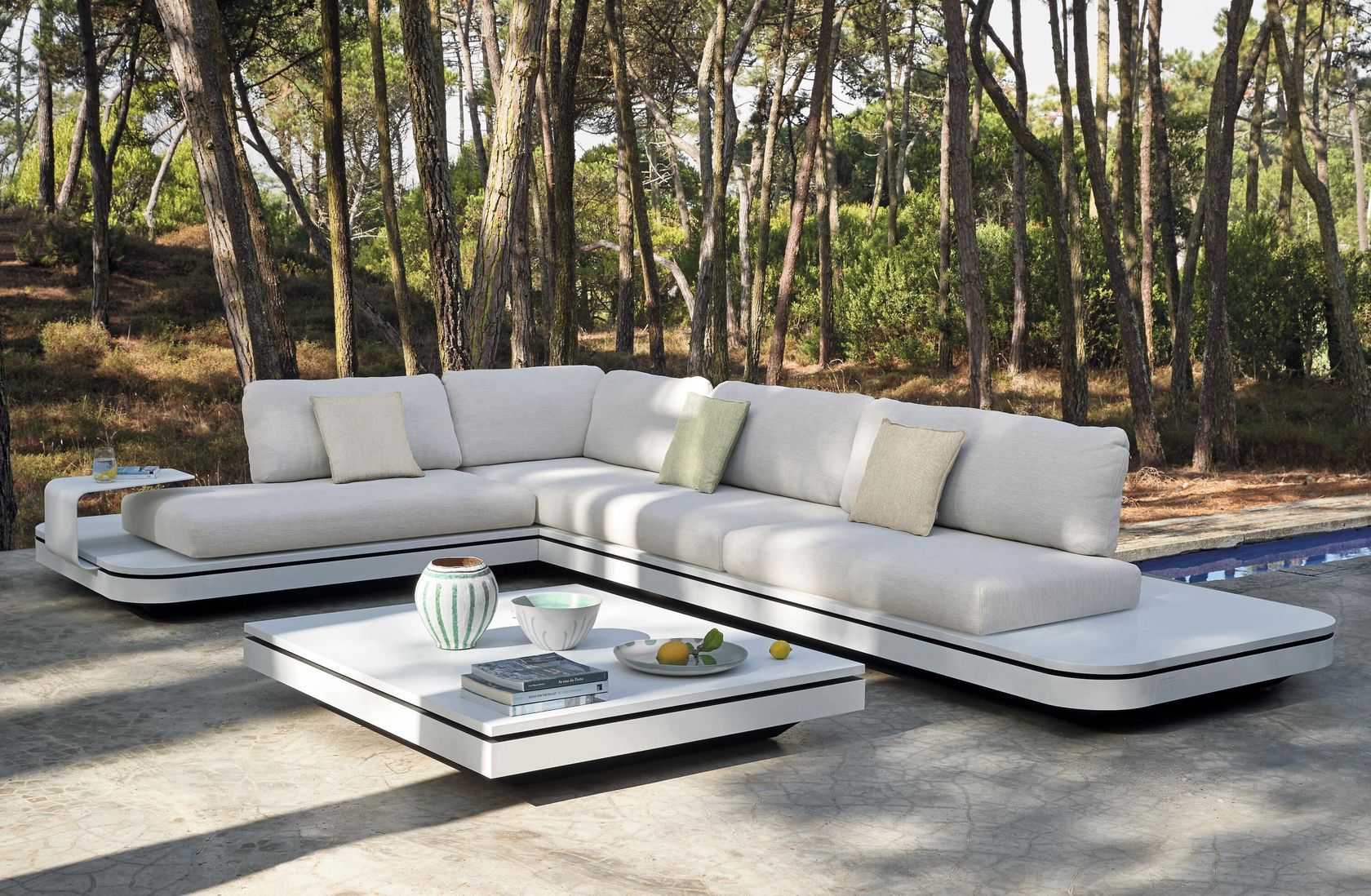
Manutti Elements modular seating in Quaryl solid surface
Manutti's Elements line uses Quaryl, a solid-surface material, rather than fabric or wood — one more outdoor-first material that asks little of an owner over winter.

Fabric, cushions and woven synthetics

Cushion fabric and umbrella canopies are the pieces most worth bringing in. Even weather-resistant outdoor fabric can hold moisture in its fill if left out through repeated freeze-thaw cycles, which invites mildew. Woven synthetic pieces are more forgiving but still benefit from dry storage: Cane-line, for instance, recommends indoor or covered storage rather than leaving pieces under outdoor covers, which can trap condensation against the weave and promote mold — a rule that holds for most hand-woven synthetic furniture, not just Cane-line's own.

What genuinely cannot stay outside

Anything built with paper is the clearest case. Lloyd Loom, the paper-and-wire weave that houses such as Vincent Sheppard use on indoor collections, is not rated for outdoor exposure at all and should never be left outside in any season. That is exactly why the outdoor lines built by houses working in that technique switch to rope, aluminum or rattan-look synthetics instead. Natural rattan and untreated wicker fall into a similar category: without a sealed synthetic coating, they absorb moisture and are best moved under cover before the first hard freeze.

None of this requires a heated garage — a dry shed, covered porch or basement is enough for cushions and fabric, while frames in teak, aluminum or synthetic weave can generally stay put. The individual collection pages in our directory note each piece's exact materials, which is the clearest way to know what your own furniture actually needs.

Frequently asked

Answered.

Does outdoor furniture need to come inside for winter?

Not all of it. Teak and powder-coated aluminum frames are built to stay outside year-round in most US climates. Cushions, umbrella canopies, natural rattan and paper-based weaves are the pieces that actually need a season indoors.

Can teak stay outside all winter?

Yes. Teak's natural oils and dense grain make it weatherproof year-round; the wood may develop a silver-gray patina, which is cosmetic and does not affect structural integrity.

Can powder-coated aluminum stay outside all winter?

Yes. The powder coating resists corrosion and is not damaged by cold. The main thing worth checking is moving hardware such as recline mechanisms and hinges, which can stiffen in repeated freeze-thaw conditions.

What should always come inside for winter?

Cushion fabric, umbrella canopies, natural rattan, untreated wicker and any furniture woven from a paper-based material such as Lloyd Loom.

Why do cushions need to come inside?

Even weather-resistant outdoor fabric can hold moisture in its fill through repeated freeze-thaw cycles, which invites mildew. Dry storage indoors or in a covered space avoids that.

Can woven synthetic outdoor furniture stay outside in winter?

Most weatherproof synthetic weaves can, but dry, covered or indoor storage over winter extends their look and avoids trapped moisture against the weave.

Should I use outdoor furniture covers in winter?

Covers can trap condensation against a woven surface and promote mold. Cane-line, for example, recommends indoor or covered storage over leaving pieces under an outdoor cover — a distinction worth understanding before buying covers for winter.

Can Lloyd Loom furniture go outside?

No. Lloyd Loom's core is paper wrapped around wire, which is not built for outdoor exposure in any season. Houses that use the technique, such as Vincent Sheppard, reserve it for indoor collections only.

What about natural rattan furniture in winter?

Untreated natural rattan absorbs moisture and is best moved under cover before the first hard freeze, unlike synthetic rattan-look weaves designed for outdoor use.

Do outdoor umbrellas need to be stored for winter?

The fabric canopy benefits from indoor or covered storage over winter. Aluminum or teak poles and bases generally tolerate the season outside.

How do I protect aluminum hinges and moving parts over winter?

A light wipe of a silicone-based lubricant on hinges and recline mechanisms before winter, plus keeping the piece dry, addresses most stiffening caused by freeze-thaw cycles.

Does teak need a fresh coat of sealer before winter?

Not specifically for winter. Owners who maintain teak's honey-brown color with a sealer typically reapply it once in spring rather than before the cold season.

Does Premium Furniture sell furniture?

No. We are an editorial directory and journal. We map the houses and point you to the maker. We do not sell or publish prices.

Which market do you cover?

The United States. Availability and lead times are framed for US buyers, while the houses themselves are European.

Let's talk

Request a quote or partnership

Write to desk@patio-furniture-sets.com and the desk will reply within one business day.

By submitting, you consent to be contacted about your enquiry.